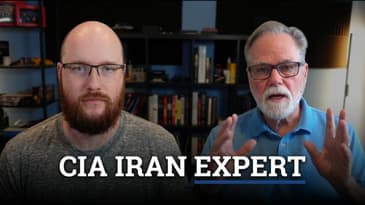
Joe sits down with former CIA operations officer Mark Fowler for a wide ranging conversation about how he got into the Agency, what case officer work actually looks like, and how major events like 9/11 and the Iraq war reshaped his career.
Mark also gives a detailed historical explanation of US Iran relations, from Operation Ajax to the present day conflict, and explains why intelligence work is usually more about piecing together fragments than finding a single smoking gun.
We discuss Mark Fowler’s path from real estate into the CIA, the training and language demands of operations work, the intelligence failures and assumptions behind Iraq, and the long arc of US Iran hostility. If you want context on how intelligence officers think, this one is packed with it.
00:00 - How Mark Fowler got introduced to the CIA
01:32 - Real estate, restlessness, and the first stirrings of a government career
02:27 - Cold outreach to the FBI, Secret Service, and CIA in the 1970s
03:21 - ROTC, military crossroads, and the path that almost happened
03:48 - The Wall Street Journal ad that opened the door to the Agency
05:05 - Getting through CIA hiring despite feeling underqualified
06:34 - Why the Agency needs many kinds of people
07:32 - How Mark ended up in the Middle East and then Farsi
08:54 - A 22 plus year career focused on Iran and Iraq
10:11 - Running human sources inside Iran
12:08 - Operations officers vs analysts and what the job really was
14:54 - Wanting a mission, not just a job
16:21 - “Forrest Gump” moments and the unpredictability of the career
18:17 - 9/11 in real time and the immediate shift in priorities
19:41 - Why going to Iran is not simple or direct
20:37 - Cover, aliases, and why shallow cover is not enough for Iran
22:20 - Preparing for overseas assignments and language requirements
25:03 - How long language training can take for different regions
27:12 - Documentation, cover maintenance, and pre deployment prep
29:24 - Why younger officers can be assigned very sensitive work
30:58 - Joe’s own language learning experience in German
33:55 - Simulating stress in language and field training
35:03 - How CIA selection values adaptation under uncertainty
36:02 - Learning new alphabets and reading operational material
39:15 - Why some officers do not need foreign languages
40:24 - The role of ops translators in the field
41:17 - Shifting to Iraq after 9/11
43:27 - Separating 9/11 from Iraq and why that distinction matters
44:34 - UAE connections to the 9/11 hijackers
46:43 - Why Afghanistan became the immediate focus
48:11 - How Iraq pulled intelligence attention away from Afghanistan
49:38 - The WMD commission and the postmortem on Iraq
52:44 - Why assumptions about Iraq’s past capabilities mattered so much
55:32 - The aluminum tubes case and how misreads happen
57:54 - Sitting an Iraqi scientist and CIA analyst down together
60:20 - Why sources in Iraq were so hard to keep alive
62:17 - Policy came first and intelligence had to catch up
63:15 - Why the whole intelligence community reached the wrong conclusion
66:10 - Saddam’s motive for bluffing about WMD
68:45 - Putting the puzzle together while it is still being built
69:26 - Turning to Iran and the modern conflict
71:12 - The long historical roots of Iranian resentment
73:06 - Mossadegh, nationalization, and Operation Ajax
77:14 - The Shah, unrest, and the 1979 revolution
79:29 - The Iran Iraq war and the rise of the regime’s anti US identity
82:20 - Revolutionary Guards, Quds Force, and proxy warfare
84:26 - Why Iran pursued nuclear capability in the first place
86:39 - The role of US support, Iranian scientists, and technical capacity
89:52 - The 2007 to 2009 judgment that Iran did not make the leap to a weapon
91:39 - The difference between capability, weaponization, and delivery
93:33 - Why real proof would have changed the public case for war
95:26 - The June strikes on nuclear facilities and what that suggested
97:25 - Netanyahu, Trump, and the case for escalation
99:44 - Why Mark thinks Trump made the final decision
102:07 - A warning about going to war without understanding the regime
103:34 - Why negotiation may be the only exit
105:03 - The Strait of Hormuz as a weapon of disruption
107:28 - Why Mark keeps writing about this context
108:26 - Mark’s upcoming fiction novel, A Prince of Mirrors
109:31 - Closing thanks and wrap up